Benchmarks of Civilization
An Account of the Development, Migration and Kinship of the World’s Peoples and Cultures
News and Discoveries
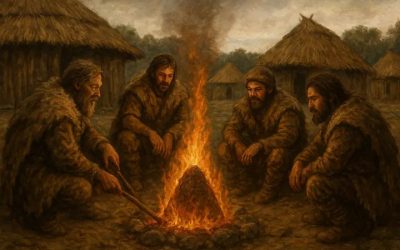
Medium: The Iron Age Began with Accidental Advances in Metallurgy
30 Mar 2026At a site called Kvemo Bolnisi in southern Georgia, archaeologists have discovered ancient copper smelting remains dating back more than 3,000 years. Among the copper slag and furnace debris, they also found large amounts of hematite, a mineral rich in iron...
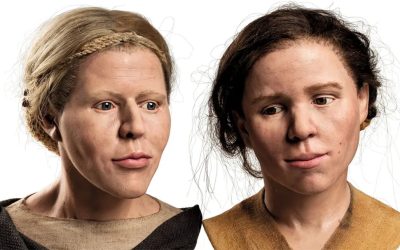
Smithsonian: See the Faces of Two Sisters Who Toiled Away in a Neolithic Mine 6,000 Years Ago
August 5, 2025Roughly 6,000 years ago, two sisters worked in a mine in what is now the Czech Republic. Day after day, they extracted heavy rocks from the ground—even when they were injured. Eventually, after they died from unknown causes, they were buried on top of...
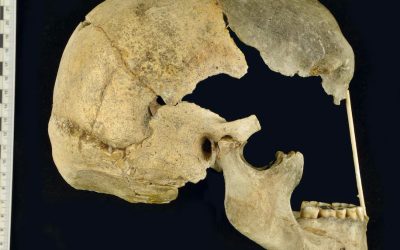
Scientists pinpoint when humans had babies with Neanderthals
A pair of new studies sheds light on a pivotal but mysterious chapter of the human origin story, revealing that modern humans and Neanderthals had babies together for an extended period, peaking 47,000 years ago — leaving genetic fingerprints in modern-day...
Artificial Intelligence Search Results
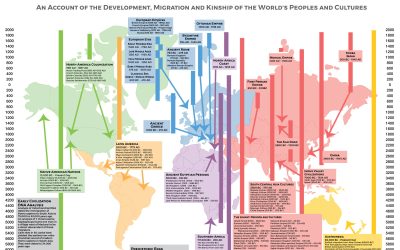
Delve into the intricate journey of human development, migration, and cultural kinship across the globe. Our resources provide a comprehensive look at how civilizations have evolved over millennia.The Benchmarks of Civilization poster serves as a pivotal educational...
Links to Benchmarks of Civilization Instagram and X Acccounts
X Account Instagram Account Please join us on either account to see new discoveries from around the world.
Telegraph: Ancient Iraqis may have worshipped Alexander the Great, says British Museum
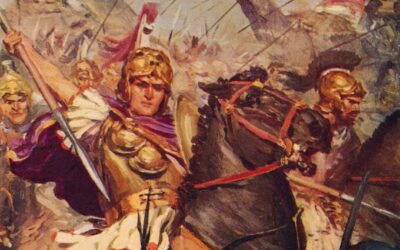
British Museum experts could have solved an archaeological mystery after discovering a temple where Alexander the Great may have been proclaimed divine. Experts working on the ancient city of Girsu in southern Iraq unearthed a 4,000-year-old Sumerian temple, so old...
About Benchmarks of Civilization
This Benchmarks of Civilization poster and its accompanying explanatory catalogue provide brief and illustrated resources about the development, migration and kinship of the world’s peoples and cultures.
Historically, there have been numerous and vigorous academic disagreements about the timelines and events of most civilizations, particularly prehistoric.
However, recent scientific techniques for evidence dating and genetic tracing have provided new insights into past civilizations and cultures. That historic and genetic evidence demonstrates the kinship between all people of all civilizations and cultures over the millennia of human history.
The Benchmarks of Civilization poster helps to visualize the migration of populations. It provides an overview, and geographical reference and timeline for each major civilization and culture within each region of the world. Each timeline represents a cultural wave, with a beginning and end, some just a few centuries, and others for millennia.
Each new civilization was the result of a population migration sometimes over a relatively short period. The poster exposes fascinating issues about the kinship between cultures: why and how did a population group break away and migrate, and how was a new culture born? Often plague or famine were the source of the death of a culture and impetus for migration as people sought new food and resources. Religion was also often a power for birth when a group fled or was forced away.
Waves out of Africa
